

The Role of Solar Irrigation Pumps in Sustainable Agriculture
Published on December 18, 2024
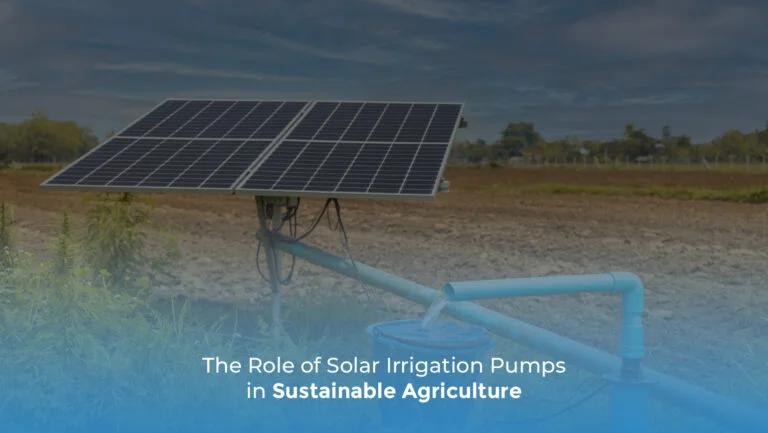
India’s agricultural sector accounts for nearly 90% of the country’s water usage, and the demand continues to grow. However, challenges such as depleting groundwater levels, irregular rainfall, and
In an era where sustainability is no longer a choice but a necessity, the agricultural sector faces the challenge of balancing productivity with environmental responsibility. Water is a crucial resource and plays a central role in this balance. Traditional irrigation systems, however, often rely on diesel or electric pumps that are both resource-intensive and environmentally taxing. Then came solar irrigation pump systems, a game-changer for sustainable farming in India. These systems harness renewable solar energy to power water pumps, reducing dependence on conventional energy sources while offering an eco-friendly and cost-effective solution.
The Need for Solar Irrigation Pumps in Agriculture
India's agricultural sector accounts for nearly 90% of the country's water usage, and the demand continues to grow. Challenges such as:
- Depleting groundwater levels
- Irregular rainfall
- Escalating energy costs
create hurdles for farmers. Traditional irrigation systems make these issues worse with high operational costs and environmental impact.
Solar irrigation pump systems present a viable alternative. By using sunlight, a free and abundant resource in India, these systems offer a sustainable way to pump water for irrigation, ensuring uninterrupted farming activities while reducing costs and emissions.
Key Benefits of Solar Irrigation Pumps
- Cost Efficiency: with no recurring fuel costs, farmers save significantly over the long term
- Low Maintenance: solar pumps need minimal upkeep compared to diesel-powered systems
- Eco-Friendly Operations: these systems emit no greenhouse gases, making them an environmentally responsible choice
Advantages for Farmers
1. Reduced Dependency on Grid Electricity or Diesel
One of the most significant advantages of solar irrigation pumps is their independence from traditional energy sources. Many rural areas in India face erratic electricity supply, and diesel prices fluctuate frequently. Solar pumps provide a reliable alternative, so farmers can irrigate their fields without interruptions.
2. Economic Benefits
The initial investment in a solar irrigation pump system may be higher, but government subsidies and financing schemes have made these systems more accessible to farmers. Over time, lower fuel or electricity costs offset the initial expense, giving long-term savings.
3. Support for Marginalized Farmers
Small-scale and marginal farmers often struggle to bear the high costs of conventional irrigation. Solar systems democratize access to water resources, empowering these farmers to improve productivity and secure better livelihoods.
Impact on Sustainable Agriculture
Adopting solar irrigation pump systems fits the principles of sustainable agriculture. By minimizing the environmental footprint and conserving energy, these systems help keep farming practices viable for generations to come. The use of renewable energy also contributes to national goals of reducing carbon emissions and combating climate change.
Solar irrigation also supports efficient water usage. Many systems can be combined with drip or sprinkler irrigation methods, which optimize water distribution and minimize wastage.
Challenges in Adoption
Despite the many benefits, the adoption of solar irrigation pump systems in India faces certain challenges:
- High Initial Costs: even with subsidies, the upfront cost can be a deterrent for many farmers
- Awareness and Training: farmers need adequate knowledge of installation, usage and maintenance to operate these systems effectively
- Scalability Issues: for large-scale farms, current solar technology may not always provide enough power, which calls for hybrid models or supplementary energy sources
The Way Forward
To get the most from solar irrigation pump systems, the government, the private sector and local communities need to work together. Policymakers can provide incentives and expand subsidy programs, while solar irrigation pump system suppliers in India can offer innovative solutions tailored to different farming needs.
Awareness campaigns and training programs can also help farmers better understand the technology and its advantages. By addressing these challenges, India can accelerate the adoption of solar-powered irrigation and make agriculture truly sustainable.
Why Choose Roto Energy?
Roto Energy is at the forefront of India's transition to green and sustainable water pumping solutions. As a trusted provider of solar irrigation pump systems in India, the company combines innovation with reliability to meet the diverse needs of farmers. With a focus on quality, efficiency and long-term value, Roto Energy empowers farmers to embrace sustainable practices and secure a brighter future for agriculture.
Published: December 18, 2024 | Updated: June 17, 2025
Tagged: community water supply, solar irrigation pump systems in India, Solar Pump Systems for agriculture, Solar pumps, solar water pumping in Spain, Solar water pumping systems for livestock, solar water pumps, Solar-Powered Water Pumping Systems, Submersible Solar Pumps, water pumping systems